
LONDON, October 27
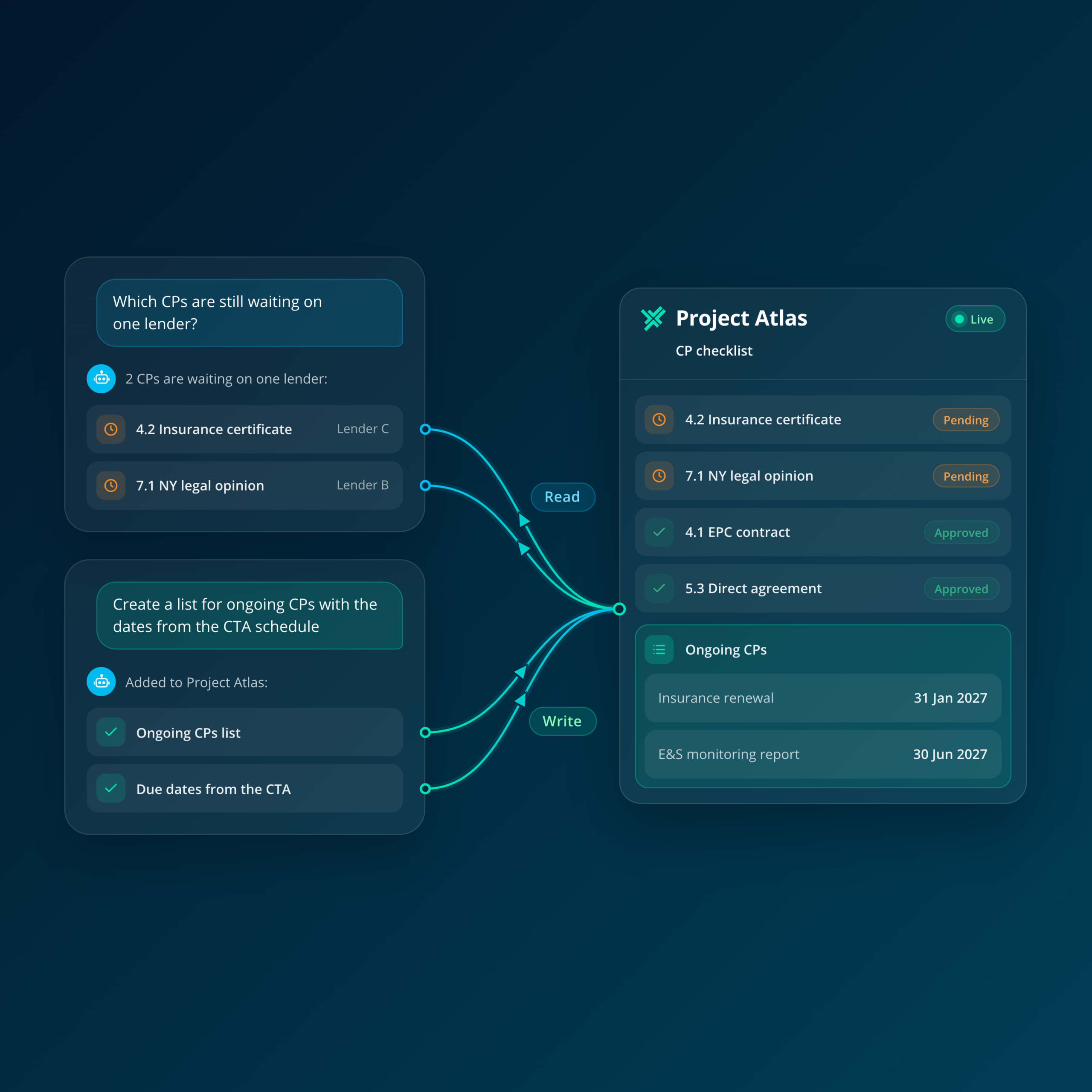
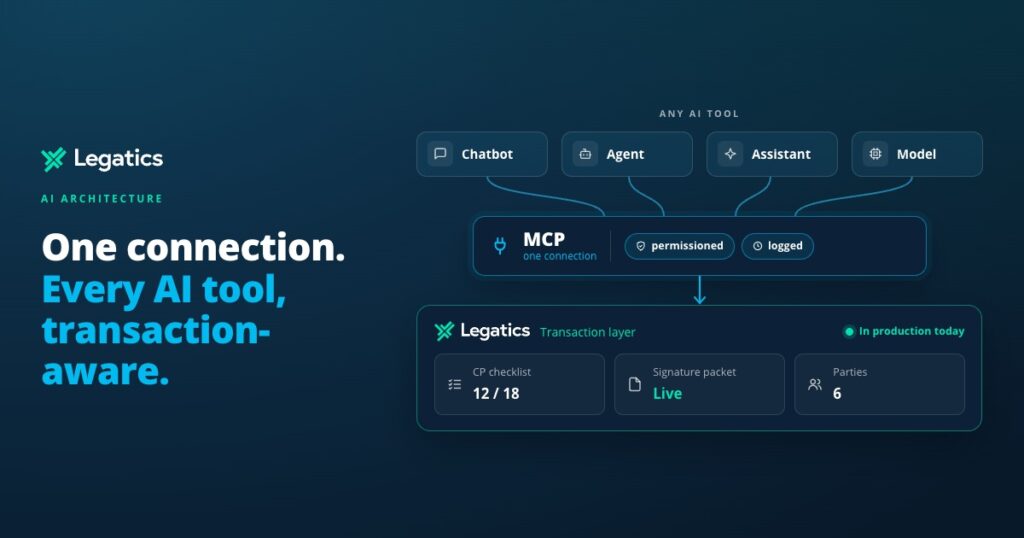
Legatics, the transaction management platform used by leading law firms globally, today announced write capabilities for its MCP server (Model Context Protocol, the open standard AI tools use to connect to other software). Since mid-July, the MCP server has let AI assistants read live matter data directly from Legatics. From today, they can also create and update it, so a lawyer can go from knowing what’s happening on a deal to doing something about it without leaving the AI tool they are working in.
Until now, an AI assistant could tell a lawyer what was outstanding on a matter, but a person still had to open Legatics and make changes themselves. With write access, the same tools can create matters, update list rows, progress checklists and build out data room and binder structures, directly in Legatics. A lawyer can hand their AI tool a facility agreement and have the conditions precedent checklist built in Legatics, with each condition filed under the right section, assigned to the right party, and ready to track.
“Read access answered a real question: what’s happening on this deal right now,” said Anthony Seale, Founder and CEO of Legatics. “But knowing and doing were still two separate steps, and someone always had to bridge them by hand. Write access closes that gap. It means the AI tools our customers already rely on can move a transaction forward directly, not just report on it.”
“A deal isn’t run by one lawyer in one chat window,” said Rob MacAdam, Chief Product & Strategy Officer at Legatics. “It’s run across the firm, the client and the other side, and they all need to see the same, current position. With write access, the work a lawyer does in their AI tool lands straight in the shared record everyone on the deal is working from, with the lawyer’s own permissions and a full audit trail.”
AI assistants that act, not just answer
The same MCP connection an AI assistant already uses to answer questions about a matter can now create and update data on it too. A lawyer can ask their AI tool to set up a new matter, or to build a checklist with the right columns, responsibilities and statuses already in place. They can keep that checklist current by marking a condition as satisfied, adding a comment or reassigning an item as the deal moves. And when the AI finds change of control provisions across a set of contracts, the lawyer can ask it to add them to a Legatics list with owners and next steps, ready to work through with the client and the other side in a workspace the firm has already approved.
The same security model customers already trust
Every write action is scoped, permission-checked and audited on the same enterprise-grade access controls already in place for read actions. Access follows the user exactly as it does today, so an AI tool can only change what the lawyer using it is permitted to change. Every write is logged in the matter’s audit trail, write access sits behind its own setting so nothing changes for a firm unless it turns it on, and administrators can switch it off at any time. Write capabilities are included for all Legatics customers at no additional cost.
What comes next
Legatics sees this as a first step towards AI agents that help run a deal, taking on more of the day-to-day work of moving a transaction forward while the lawyer stays in control. Legatics recently joined Harvey’s Connector Library, giving Harvey users live deal context from Legatics, and is working with other leading legal AI platforms to enable mutual customers to connect them to Legatics through its MCP server.