

The closing binder is the last thing a client receives from their law firm on a transaction. After months of negotiation, due diligence and last-minute amendments, it’s the final tangible output — the record of everything agreed and executed.
Which makes it the last impression.
Most of the work that goes into producing a closing binder is invisible to clients. They don’t see the associate chasing executed documents across email chains the evening after closing, rebuilding an index because a document changed at the eleventh hour, or recreating the whole structure from scratch for a second recipient. What they see is the finished product — and they judge accordingly.
That judgment isn’t always fair. A binder that arrives late, with inconsistent formatting, documents in the wrong order or an index that doesn’t match the contents, doesn’t reflect the quality of the legal work. It reflects the quality of the firm’s processes. On a high-value transaction where the client has just paid significant fees and is already evaluating whether to put the firm on their next panel, that final deliverable carries more weight than most partners would expect.
The reputational exposure is specific:
- Incorrect or inconsistent document versions in the final binder create risk that surfaces long after closing — in disputes, regulatory reviews or future transactions involving the same assets
- Formatting that varies across matters, or a cover page that doesn’t match the firm’s brand, signals a lack of standardized process — a concern for clients who are increasingly scrutinizing how firms use technology
- Different binder versions produced manually for different recipients create the risk that the wrong documents reach the wrong party, with consequences that are difficult to recover from
The harder truth is that binder production typically happens at the worst possible moment: immediately after closing, when the deal team is exhausted and every hour spent on administrative work is an hour not spent on the next matter. That pressure is exactly what produces the inconsistencies clients notice.
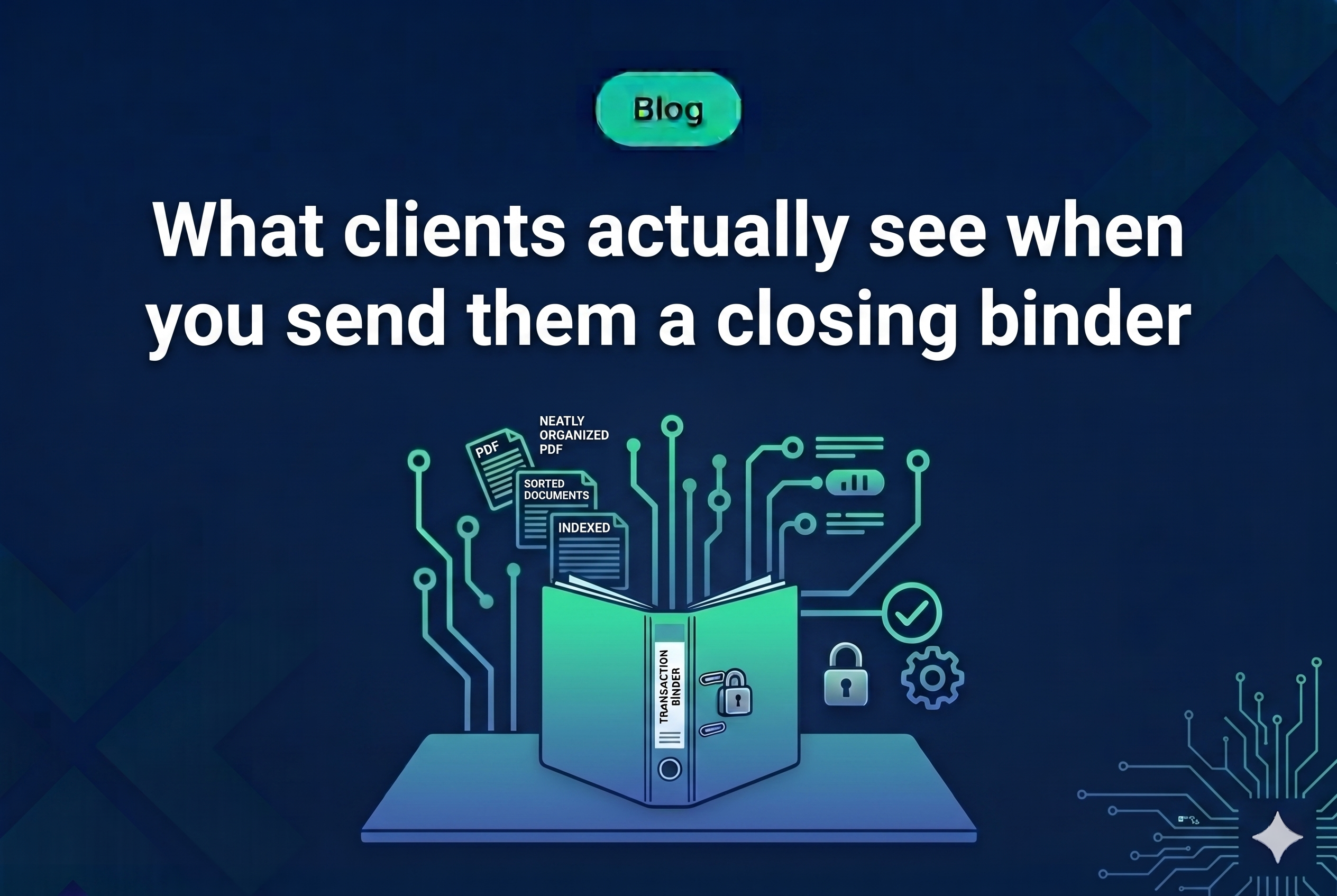
Legatics Binders reduces that exposure. Documents already held in the platform can be imported without manual collation. Firm-branded index templates — pre-approved and reusable across matters — ensure consistent output regardless of who produces the binder or when. Tailored versions for different recipients are created by duplicating and adjusting, not rebuilding. The final output is a paginated, bookmarked PDF or zipped folder, ready to share at closing.