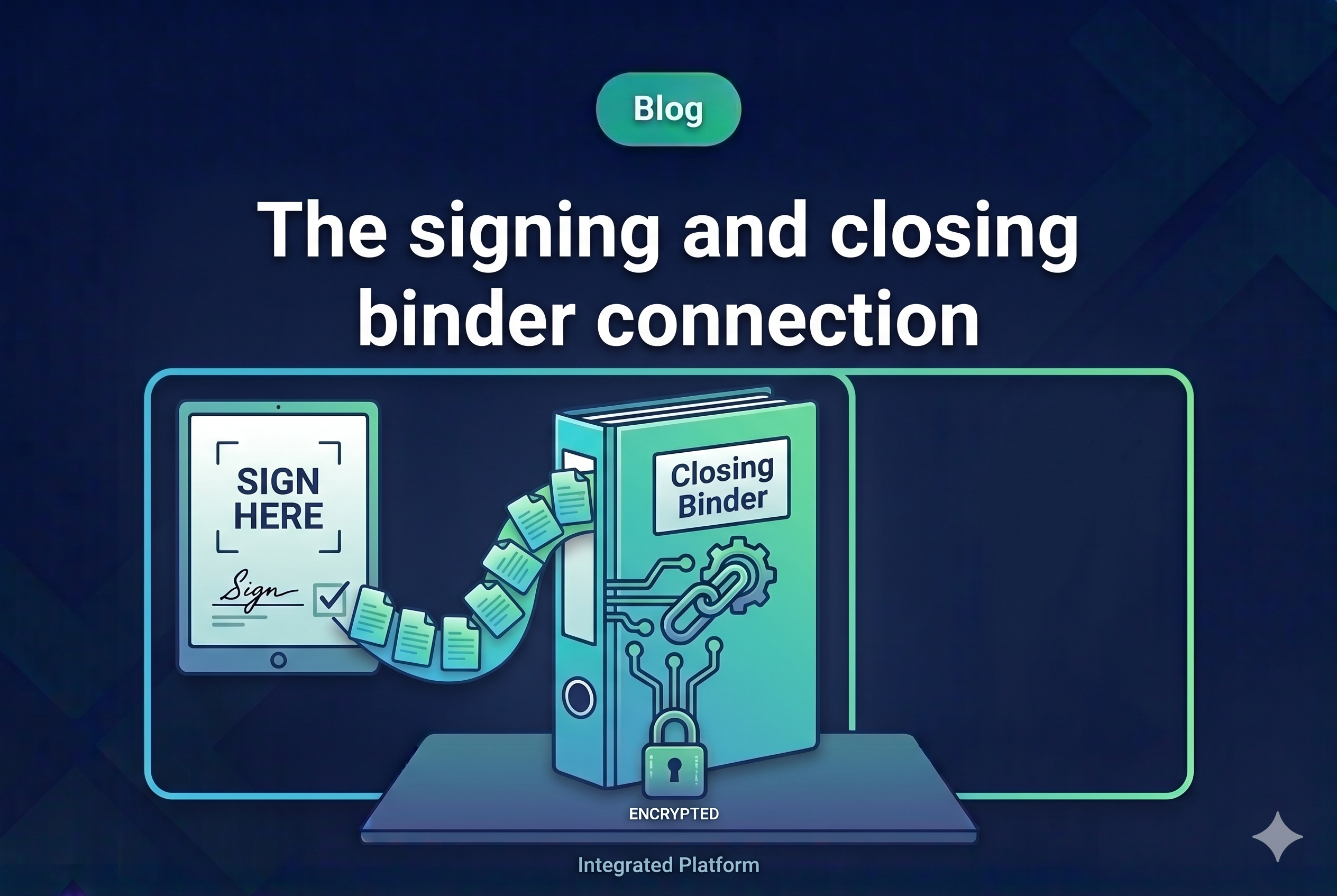


For most law firms, signing and closing binder production are treated as separate processes. Signing happens first — coordinated through DocuSign, a dedicated signing tool, email and spreadsheets. Then, once the deal is done, someone starts building the closing binder — chasing executed documents, formatting an index, compiling sets for different recipients.
That gap between the two is where a significant amount of post-closing administrative work lives. Documents that should flow directly from one stage to the next have to be manually collected and recompiled instead.
It’s a sequencing problem as much as a technology one. If signing and binder production run through the same platform, there’s no gap. The documents that were tracked through signing are the same documents that go into the binder. The work of one stage feeds the next without a manual handoff in between.
That connection matters in practice for a few reasons:
- Post-closing time pressure is highest immediately after a deal closes. Any work that can be eliminated from that window — or prepared as signing progresses — reduces the burden on the team at the worst moment
- Manually transferring documents between stages is where version control problems emerge. The executed document in the binder should be the same one that was signed. When that connection is manual, it introduces risk that it isn’t
- Post-closing write-offs for administrative tasks are a real cost. The less manual work required to get from signed documents to distributed binder, the less non-recoverable time the matter generates
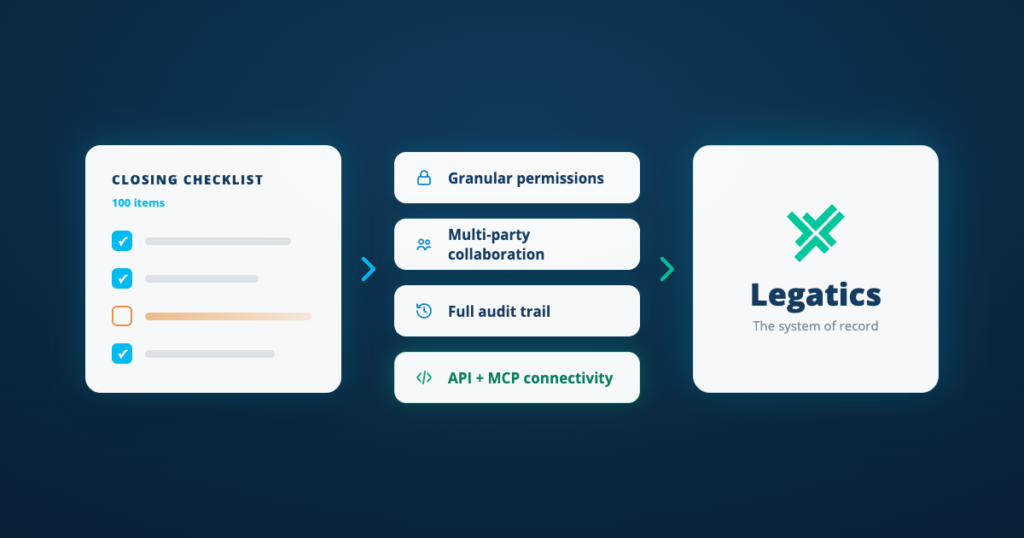
Legatics connects signing and binders within the same platform. Once documents are signed, they can be pulled directly into binders for final compilation and distribution — without starting a separate process. The matter workspace that held the transaction checklist, tracked signing and managed document versions is the same one that produces the closing set.
That end-to-end connection — from transaction planning through document execution to final deliverable — is what a purpose-built platform looks like.