

There’s a category of work in every transactional practice that is rarely think about until it becomes a problem: the work that happens after the deal closes.
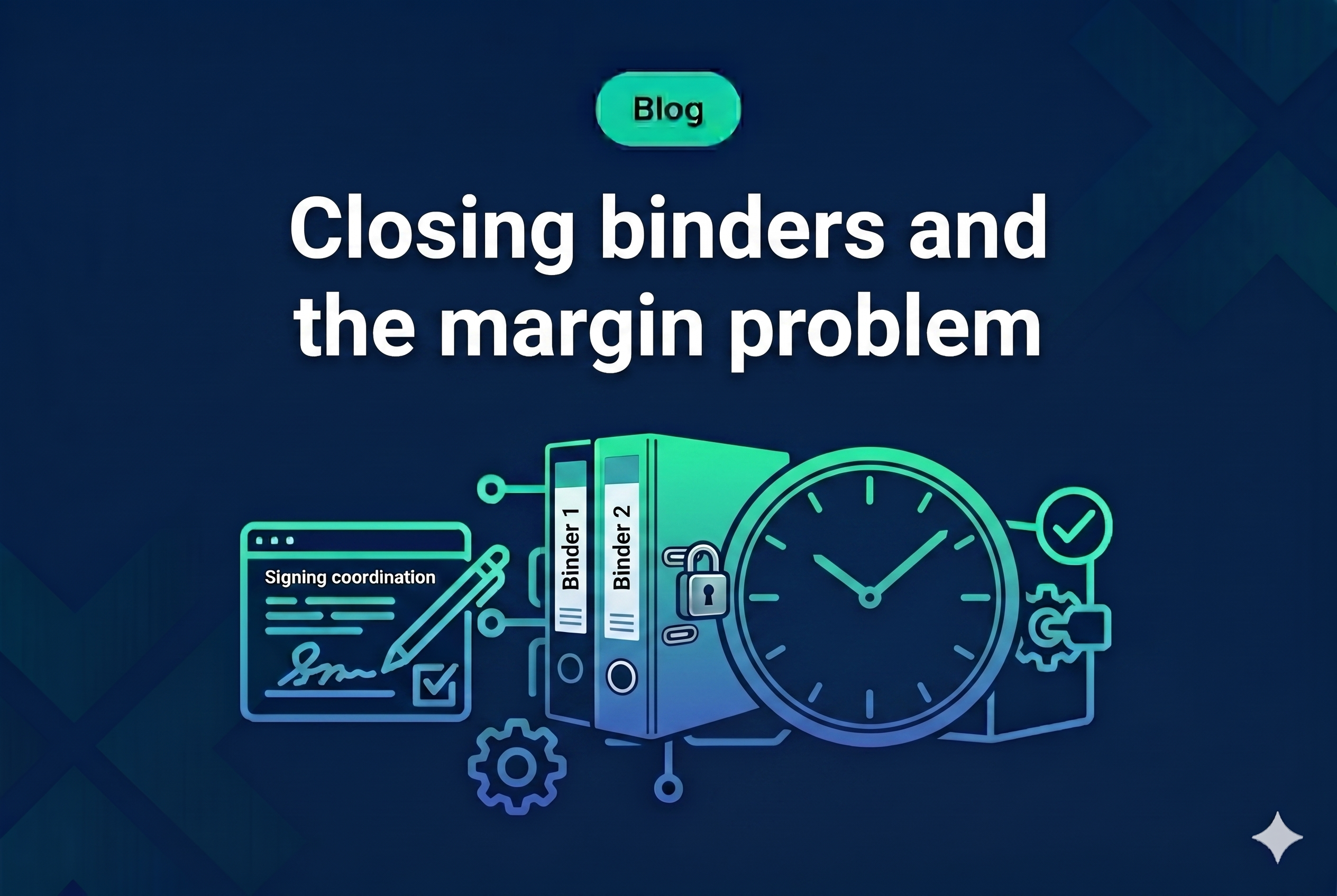
Closing binders sit squarely in that category. They’re necessary. They’re client-facing. And on most matters, the time involved in producing them — chasing executed documents, formatting an index, building separate versions for different recipients, correcting numbering when a late document is inserted — is largely non-recoverable.
On hourly matters, that time is frequently written off. On fixed-fee or capped-fee matters, it comes directly off margin. Either way, it’s overhead the firm absorbs without recovering it — and it falls on associates who have other matters to move to.
The issue is structural. Binder production is administrative work priced inside a legal fee. The assumption when a matter is scoped and priced is that the time involved is legal time. Compiling, formatting and indexing a closing binder is not legal work. It’s a necessary deliverable that sits inside the fee and reduces what’s left.
On fixed-fee or capped-fee matters, the economics depend on getting the matter done within a certain number of hours. Every hour spent on non-recoverable administrative work at closing is an hour that reduces the margin on that matter — or an hour that associate could have spent on a chargeable task on the next one.
The capacity point matters too. Deal teams are the bottleneck in a transactional practice, not partners. When associates are tied up on post-closing administration, they’re less available for the next matter in the queue. Reducing that overhead doesn’t just improve the economics of a single matter — it increases the throughput of the team.
Legatics Binders addresses this directly. Documents already stored in the platform can be imported into a binder without manual collation. Firm-approved index templates handle formatting automatically, including pagination and section numbering. Tailored versions for different recipients are produced by duplicating and adjusting rather than rebuilding. Late document insertions trigger automatic renumbering, so a last-minute change doesn’t restart the process.
The result is less time spent on work that can’t be recovered, more capacity for work that can be, and better economics on matters where the fee is fixed. For firms operating on fixed-fee transactional work, that’s not an efficiency argument. It’s a profitability one.