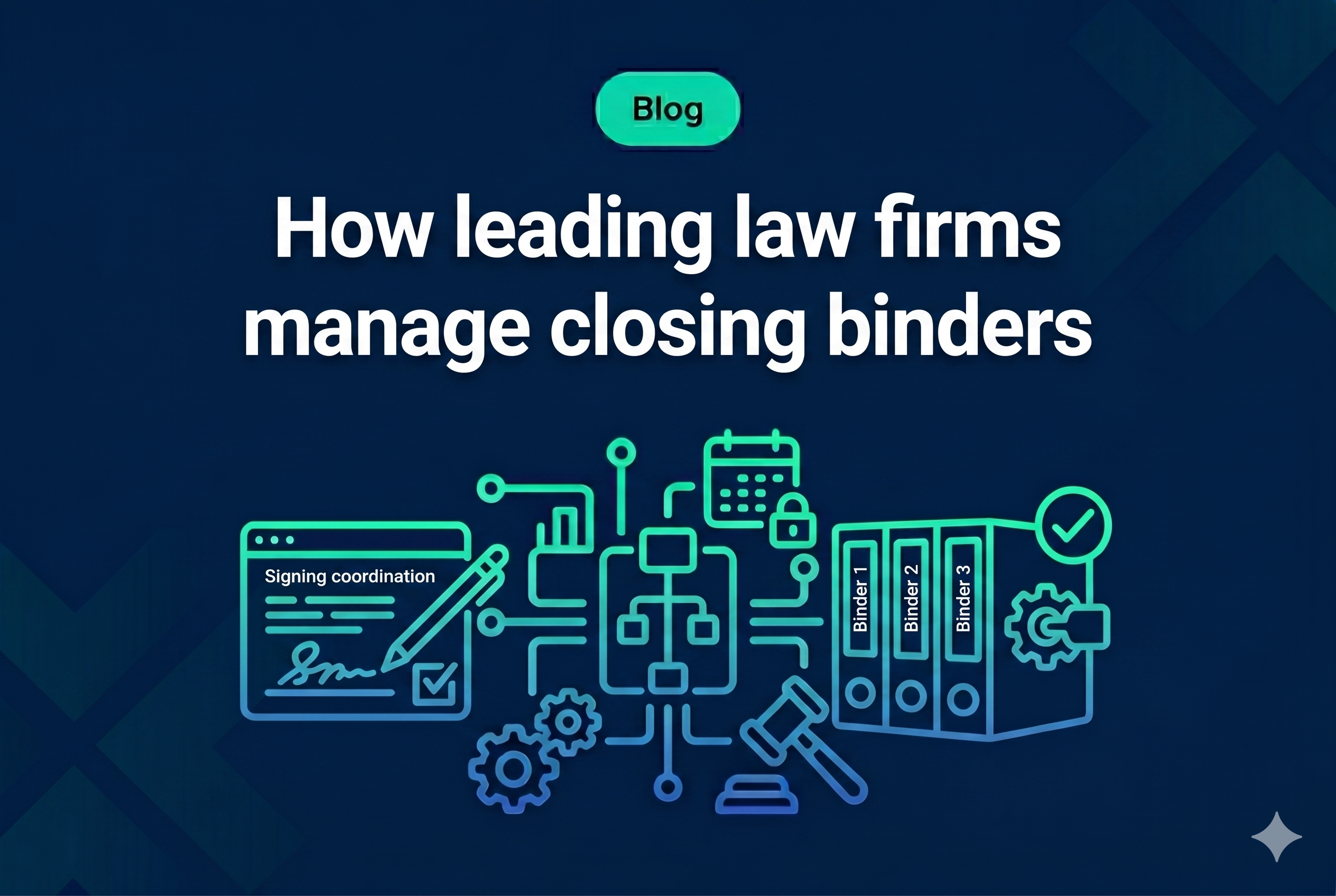


The closing binder is the final record of a transaction. It brings together every executed document, consent, certificate and approval — organized, indexed and distributed to clients and counterparties once a deal is done.
For years, law firms assembled closing binders manually. Associates would chase executed documents across email chains, compile them into a folder structure, convert everything to PDF and format an index in Word. On a complex deal, that process could take days — and that’s before any version control issues or missing documents are factored in.
The result is time-consuming, administrative work that’s often not recoverable. It pulls lawyers away from higher-value work and introduces avoidable risk at exactly the moment when client attention is highest.
A transaction management platform changes that process entirely:
- Binders are built from documents already in the platform, so there’s no last-minute scramble to locate executed copies
- Three-level section structures keep large document sets organized and navigable, with drag-and-drop to arrange items
- Multiple binder versions can be created from a single source for different recipients, without rebuilding from scratch
- Binders are exported as a single PDF or zipped folder and shared directly with clients and counterparties
- Firm-branded index templates ensure a consistent, professional output every time
Legatics Binders generates closing sets directly from documents already in the platform. At closing, firms produce polished, fully indexed binders in minutes rather than days.