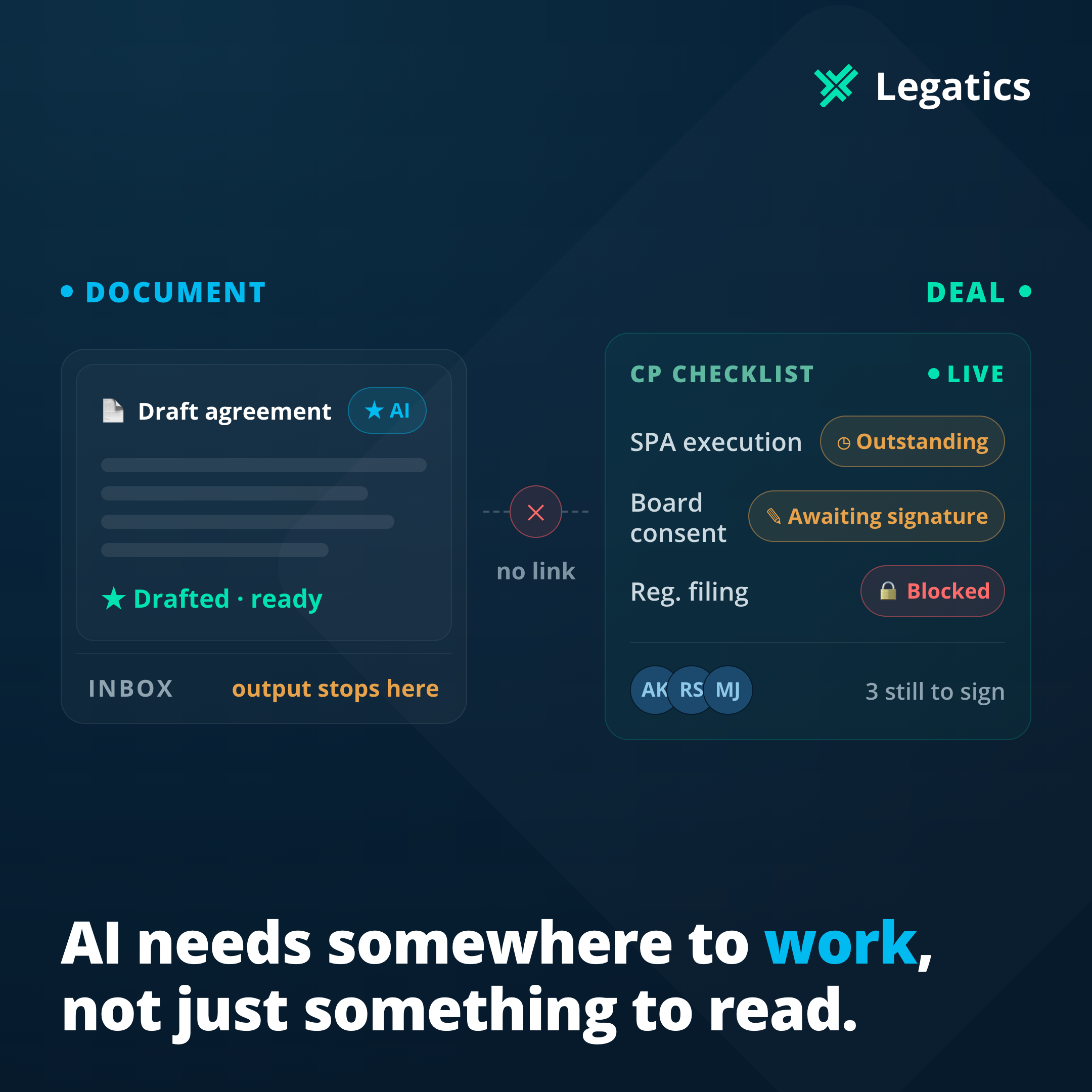


Ask a lawyer who’s just used an AI tool on a live deal what happened next, and you’ll usually hear a version of the same story. The tool read the documents. It produced something useful: a summary, a draft, a list of issues. And then the output sat in a side window while the lawyer worked out what to do with it. Paste it into an email or Word? Save it to a folder? Retype the relevant parts into the checklist?
Law firms have bought some impressive AI. What most haven’t answered is a much more basic question: when your lawyers use AI on a transaction, where does the work land?
The gap between the document and the deal
Today’s legal AI tools work at the document level. They can read a contract, summarize it, compare it against a precedent and flag unusual terms. That’s obviously nice capability and it’s getting better every week.
But a transaction is not a pile of documents. It’s a live structure: conditions precedent with owners and statuses, parties who need to sign specific pages, deadlines that depend on each other, a closing that only happens when everything is ready. The document is one node in that structure.
Document-level AI can’t see any of it. It doesn’t know which condition a contract satisfies, who’s responsible for the outstanding items or what’s actually blocking closing. It reads what you hand it and hands something back. The intelligence is impressive; the context is missing.
A useful way to picture it: an AI tool without deal context is a brilliant associate locked out of the deal room. They’ll read anything you slide under the door. They just can’t see the checklist, don’t know what’s outstanding and have nowhere to put their work.
Why pilots impress everyone and change nothing
This gap explains a pattern innovation teams know well. The AI pilot goes well. The demos are compelling. Partners nod. And six months later, deals run exactly the way they ran before.
The model was never the weak point. The AI simply wasn’t connected to the workflow where deals happen, so its output had nowhere to land and every AI interaction created a new manual task: someone had to take the result and carry it back into the deal by hand. Tools that add a processing step don’t change how work runs, however clever the step is.
The firms getting real value from AI have noticed something the market is only starting to articulate: AI needs somewhere to work, not just something to read.
What “somewhere to work” actually means
For a legal transaction, the environment AI needs has some specific elements:
- Structured deal data. The CP list needs to be queryable data, not a table in a Word file. “What’s outstanding and who owes it” should be a question with a precise answer.
- Context around every document. A file should carry its role in the transaction: the condition it relates to, the party thats signing, the deadline it sits against.
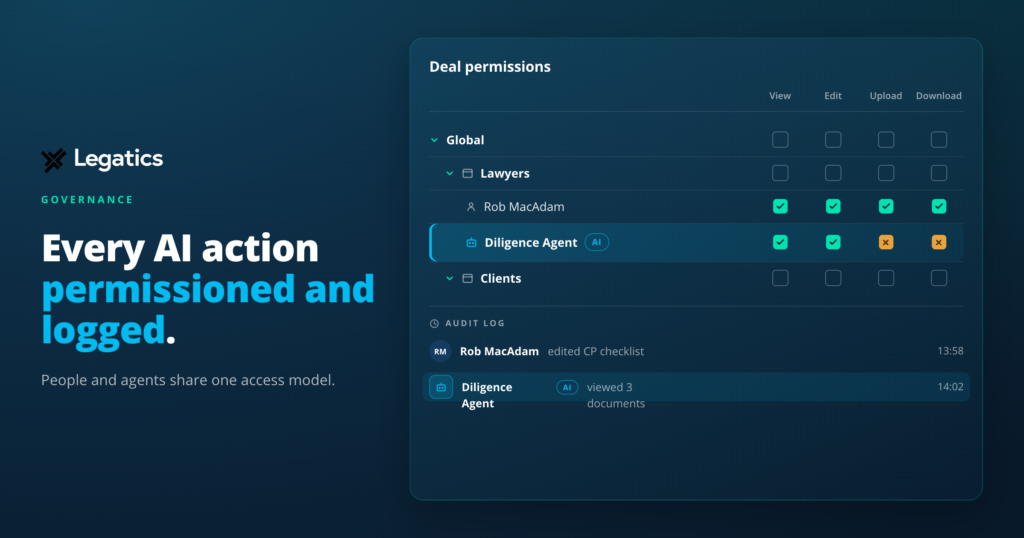
- Permissions and an audit trail. The firm needs to define what AI can see and do, and to have a record of what it did.
- A place for output to land. If AI work updates the matter, the task is finished. If it lands in an inbox, someone still has to process it.
None of this is AI technology; it’s workflow structure. Which is why, for transactions, the answer to the AI question already exists: the platform lawyers use to run deals.
The infrastructure already exists
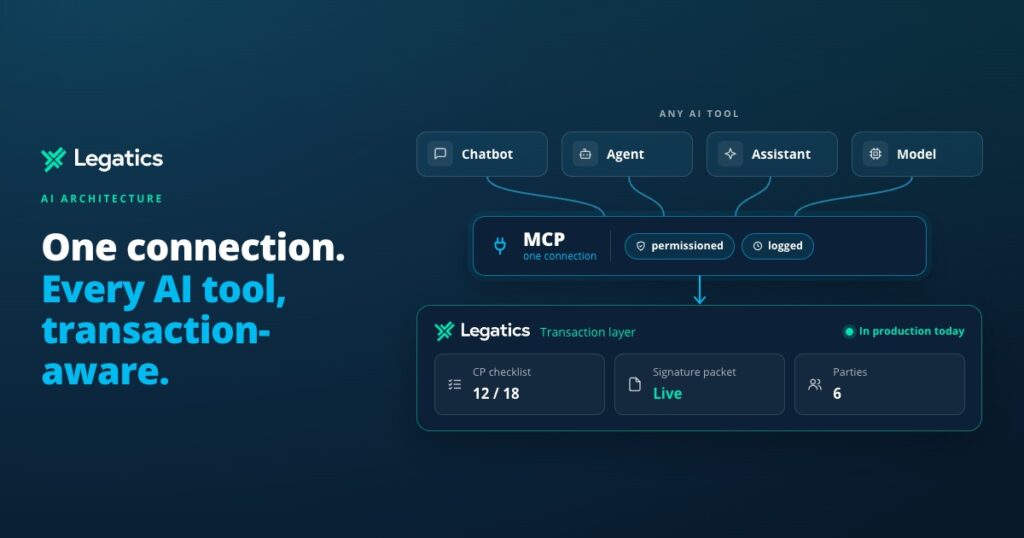
At Legatics, lawyers run transactions on structured checklists, signing workflows, closing binders and data rooms, all inside a matter with permissions and a full audit trail. That structure was built for humans, and it’s proven there: less admin, fewer stale versions, faster closings.
The same structure is exactly what AI needs. A checklist that’s data rather than prose. Documents with deal context attached. Access controls that apply to every participant. Through our new MCP server, the open standard AI tools are converging on, that environment is opening up to AI: read access is available now, and write access is coming soon, so output can land in the deal itself.
If you’re watching one shift in legal tech right now, watch that one. Better models are coming regardless; the connection between the intelligence firms have bought and the deals they run is the part still being decided.
Conclusion
If your firm is investing in AI, the highest-leverage questions may not be “which tool?” but “where is the context?” and “where does the output go?” Answer those, and every tool you buy gets more valuable. Leave them unanswered, and even the best model in the world is working through a locked door.
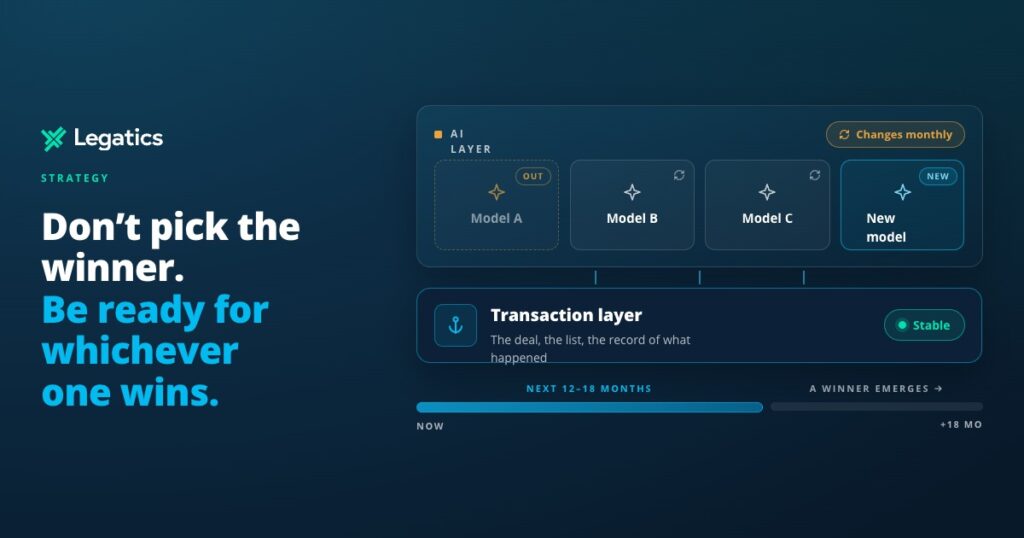
That’s the case for transaction infrastructure for humans and AI: a shared layer where context lives, outputs land, and both people and models can work against the same source of truth. Over this blog series we’ll dig into what it means in practice: why context beats model choice, what AI governance looks like when it’s enforceable, what CIOs should ask of their stack and why the next 12–18 months matter.