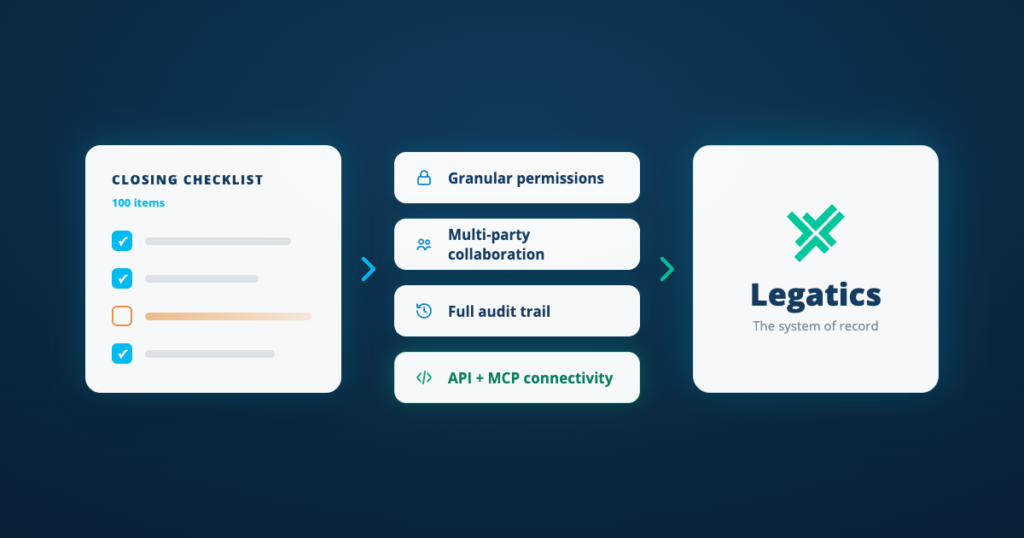


A banking and finance transaction management platform is purpose-built software that gives law firms a single workspace to track conditions precedent, coordinate signing, compile closing sets and manage every party on a financing transaction. Legatics is the platform built for this work.
Why banking and finance teams need a dedicated platform
Syndicated and acquisition financings are among the most paperwork-intensive transactions in the legal market. A typical credit agreement can involve dozens—often 100+—conditions precedent spanning multiple obligors and jurisdictions, with deals commonly running across five to fifteen lenders.
At the same time, critical workstreams run against hard deadlines. In the US, UCC-1 financing statements must be filed in the correct jurisdiction to establish priority, mortgages and deeds of trust recorded at county level, and control agreements like DACAs put in place before closing. In the UK, similar pressure exists with the 21-day deadline to register security at Companies House.
Despite this complexity, many deals are still managed through Word tables, spreadsheets, and email. The result is predictable: version confusion, CP lists buried in inboxes, and last-minute scrambles to get comfortable at closing.
What a banking and finance transaction management platform does
Legatics replaces the fragmented toolkit with one collaborative workspace:
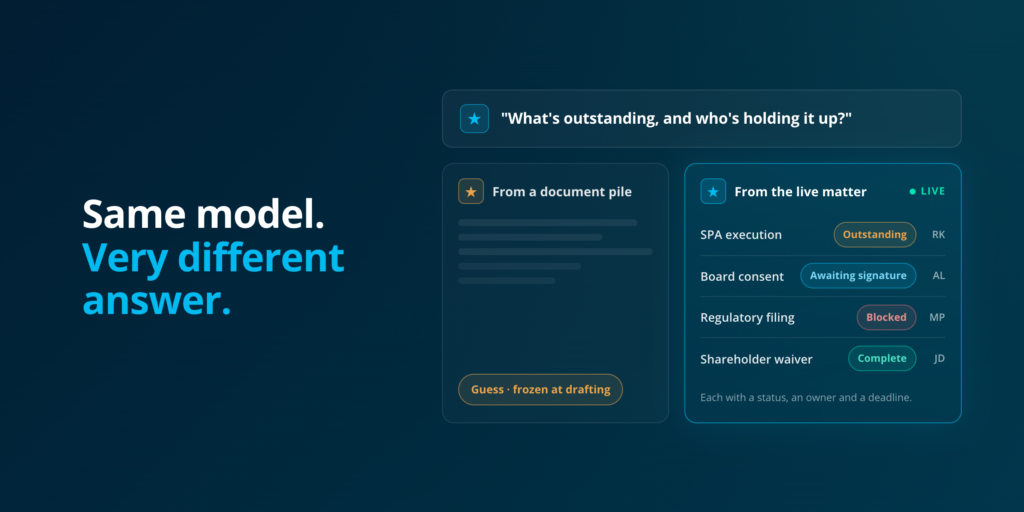
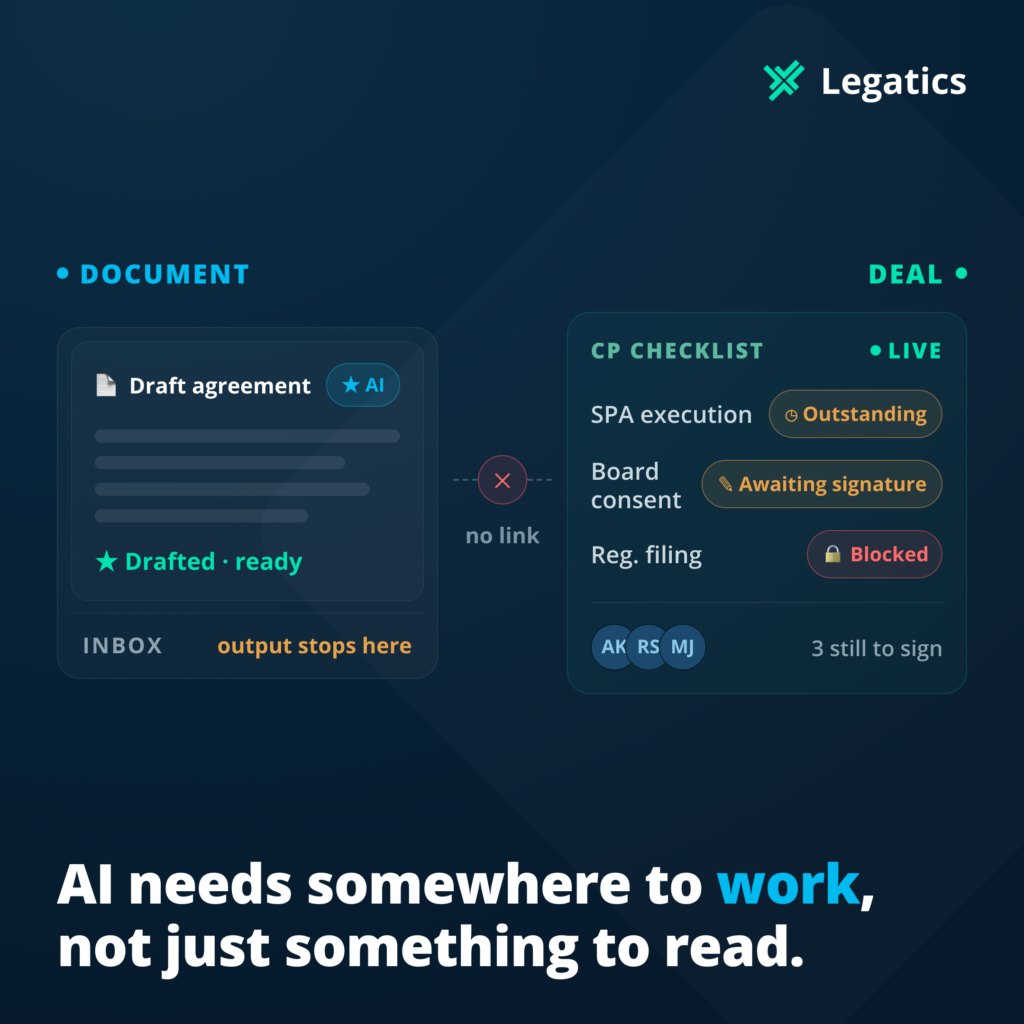
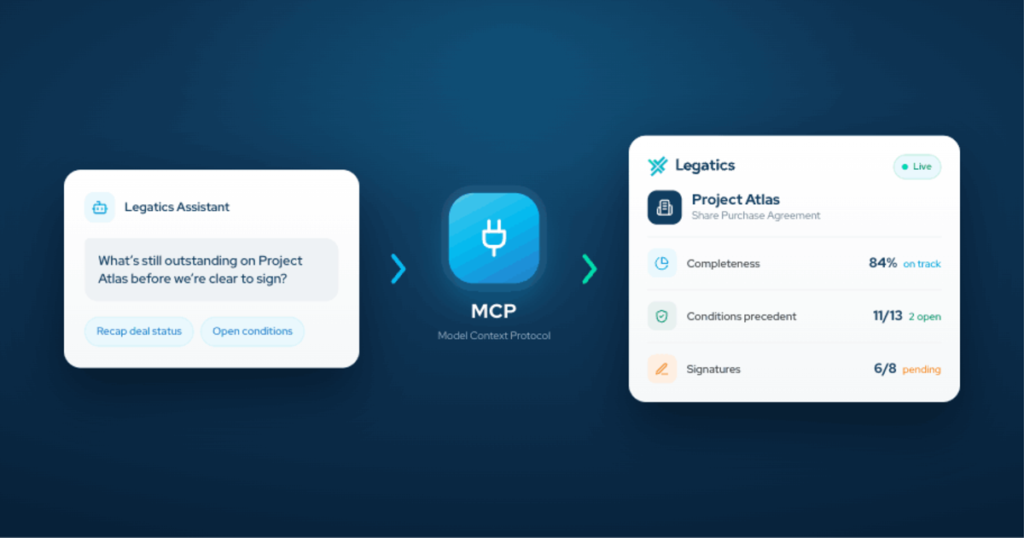
- Lists track conditions precedent and deliverable schedules with real-time status, responsible-party assignment and version history. The Legal Text Importer turns CPs from a credit agreement (or UK facility agreement) into a structured checklist in seconds.
- Signing coordinates execution across credit agreements, security agreements, guarantees, deeds of trust, mortgages and fee letters, with DocuSign integration for e-signing and signature-page extraction for wet-ink workflows. AI-powered Collate assembles final executed documents from returned signature pages.
- Binders generate professionally formatted closing sets and transaction binders from Word-based templates, with hyperlinked indexes ready for distribution to syndicate lenders and counsel.
- A built-in audit trail captures every action with timestamps and user attribution, supporting security perfection evidence and lender requirements.
What makes Legatics different from generic alternatives
General-purpose project tools like Asana and Monday.com lack legal-specific workflows. Manual processes create version control issues. Generic data room platforms offer secure document storage and Q&A, but they don’t track conditions precedent, coordinate signing or compile closing sets.
Legatics was founded by a former project finance lawyer, so the workflows reflect how transactional teams actually run deals. It uses legal terminology natively, integrates with iManage, NetDocuments and DocuSign, and is designed to feel like the Word and Excel lawyers already use.
Who uses Legatics for banking and finance
Banking and finance teams at AmLaw 100 firms, Chambers Band 1 ranked US practices and leading UK firms use Legatics for acquisition finance, real estate finance, syndicated facilities, asset-based lending and project finance. Common use cases include CP checklists, KYC tracking, security documentation and lender approvals workflows. The platform has been used in over 60 countries.
If your team runs complex financings on spreadsheets and email, book a demo.