

Every year, a busy transactional practice creates hundreds of data rooms, extranets, and secure file-sharing spaces. Whether for M&A due diligence, real estate disposals, or deal extranets, the volume is substantial.
Yet for most firms, each one operates in isolation: a separate platform, a separate login, and a separate workflow with no connection to the wider transaction.
That’s the problem worth solving.
What we mean by a data room
In transactional practice, “data room” covers a range of secure document sharing environments: the due diligence repository where a seller shares financial records, contracts, and disclosure materials with a prospective buyer; the deal extranet where working parties exchange drafts and ancillary documents; the firm-managed portal hosting matter documents for a client.
The common thread is controlled, secure sharing with external parties (counterparties, advisors, clients) as distinct from internal document management.
Transaction management platforms serve a different purpose entirely. Completion checklists track what needs to happen on the deal: conditions precedent, outstanding items, responsible parties, and sign-off status. Signing manages execution, while the binder becomes the record of completion.
Each serves a distinct function, but all operate on the same deal, at the same time.
The problem is that data rooms and transaction management almost never exist in the same place.
A tool firms use but rarely control
Most law firms don’t choose the data room platform.
On a sell-side mandate, the client or their bank may have already set up a room before lawyers are instructed. On the buy side, the firm receives an access link. The platform choice happens upstream.
But firms are often creating secure sharing environments at scale: deal extranets, firm-managed repositories, smaller matter portals. Across a mid-sized transactional practice, these add up to hundreds of separate environments every year.
The cost of separation
When the data room sits outside the transaction platform, the friction is often subtle until you look closely.
A transaction lawyer may want to give a client a clear view of deal progress. The checklist and issues list sits in one platform, and the data room in another. Preparing an update often means checking several systems and pulling the information together manually.
When a new advisor joins the deal, their data room access typically needs to be set up separately from their matter access: a different system, a different administrator, and a separate audit trail. If a permissions issue arises, there are multiple places to check.
A partner looking to understand where a matter stands may see part of the picture in the transaction checklist, while the data room activity — what has been shared, who has accessed it, and what may still be outstanding — sits elsewhere.
What integration actually delivers
The case for integrating data rooms into your transaction platform isn’t about documents flowing automatically between modules.
The data room and the transaction checklist run as parallel workstreams: due diligence proceeds alongside condition satisfaction and signing preparation, not in sequence with it.
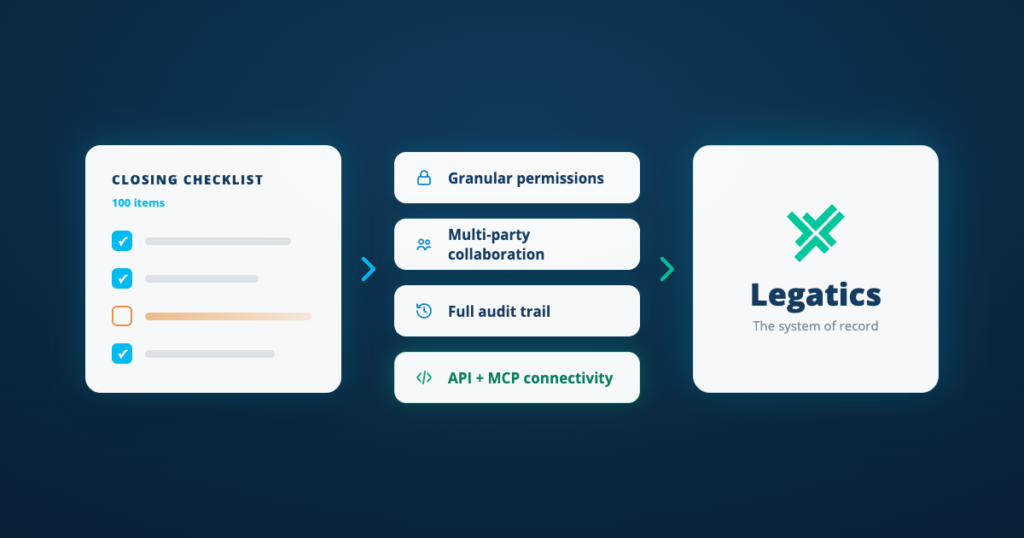
When the data room sits within the same platform as your checklists, signing workflow, and binders, everyone on the matter works from a single environment: one login, one permission model, one audit trail, and one view of the deal.
Add a party to the matter and their data room access is managed in the same place. Lawyers, project managers, and clients can see the status of the transaction without switching systems.
That’s what bringing data rooms in from the cold actually means: not a technical integration between modules, but a consolidated transaction stack where secure document sharing is a native capability rather than an afterthought bolted on from outside.
For firms running deals at volume, the compounding effect of that consolidation is significant.